
Projects I Design to Solve Structural Problems
A collection of system projects developed across multiple industries. Each one designed with a single goal: create a solution that works in reality, not only on paper.
All of them is a part of Archeon Dynamics

Doctor Deck

Doctor Deck is a next-generation diagnostic intelligence system built on a dedicated medical device and a multi-layer clinical architecture. It unifies structured interviews, laboratory data, imaging insights and global medical knowledge into one secure, immediate decision-support engine.Its purpose: reduce diagnostic uncertainty, accelerate clinical reasoning, and give physicians a complete, validated picture of the patient — in seconds.

Problem
Modern primary care operates under impossible pressure:
• 6–12 minutes per patient,
• fragmented systems,
• outdated tools,
• inconsistent data,
• and the requirement to recall thousands of clinical patterns from memory.
Doctors must:
• analyse symptoms,
• review history,
• interpret results,
• check contraindications,
• follow guidelines,
• and document everything
— all while the next patient is waiting.
This environment produces:
• diagnostic delays,
• unnecessary imaging,
• missed conditions,
• over-referrals,
• high cognitive load,
• and rising physician burnout.
Current digital tools do not fix the real bottleneck.They are slow, unstructured, incomplete, or unsafe for clinical decision-making.
Solution
A dedicated medical device with a custom OS and a multi-layered memory architecture designed exclusively for clinical use.
Doctor Deck integrates:
1. Structured Clinical Interview
Adaptive, guideline-aligned interview engine that collects symptoms and red flags with medical precision.
2. Lab & Imaging InterpretationInstant
OCR and file ingestion of lab results, ECGs, USG summaries or radiology reports — transforming them into structured clinical data.
3. Full Clinical Knowledge Base
Up-to-date, medical-school-level knowledge used in real teaching environments worldwide, mapped to diagnostic probabilities and differentials.
4. Integrated Decision Support
Doctor Deck identifies likely diagnoses, suggests differential considerations, highlights risks and recommends next diagnostic steps and specialists.
5. Future Modules (Ecosystem Expansion)
• Live USG assistance — AI marking suspicious regions during real-time ultrasound.
• CT/MRI anomaly detection — second-look analysis reducing oversight risk.
• AR surgical overlay — augmented-reality assistance for surgeons in complex procedures.
6. Military-grade security
Triple-isolated memory modules, hardware verification, encrypted access keys and bank-/military-level data protection ensure the highest clinical safety standards.
Doctor Deck supports the doctor — it does not replace them.
My role
designed the entire ecosystem independently:
• the hardware concept,
• the OS architecture,
• the cryptography and memory model,
• the clinical workflow,
• the diagnostic logic,
• the long-term ecosystem roadmap(including imaging and AR extensions).
Every layer — from interview structure to multi-device medical integration — was created by me.
Stage
Concept + full architecture + hardware model + workflow logic + security design→ Ready for R&D and medical partnerships
Driving.By.24

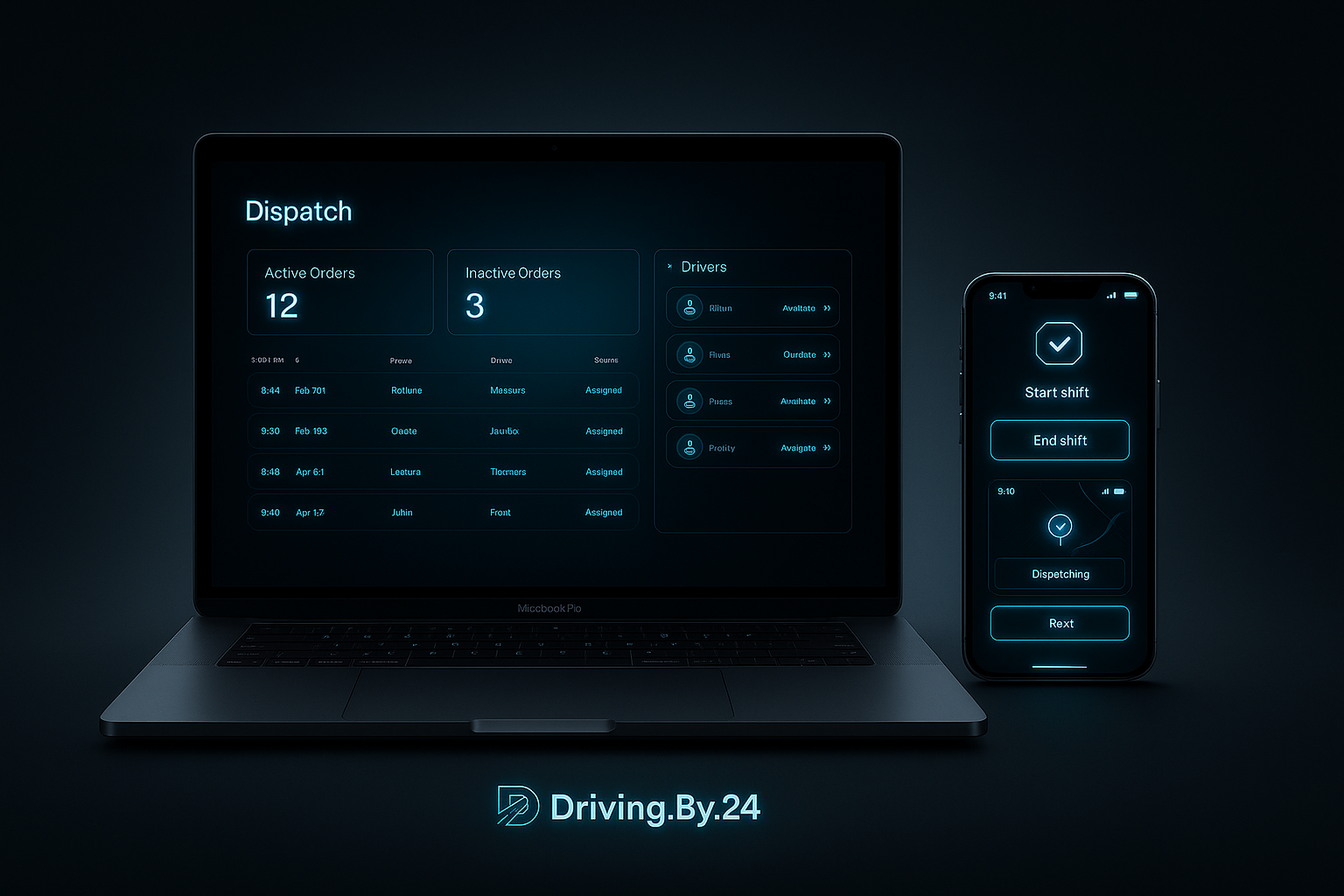
Driving.By.24 is a continental-scale logistics and workforce system designed to eliminate downtime in European road transport by enabling continuous 24/7 truck operations through dynamic driver rotation, automated matching and real-time availability forecasting. It transforms fragmented HR and transport processes into one integrated operational engine connecting carriers, drivers, depots, duty cycles and compliance rules across Europe.
Problem
European transport loses billions every year due to driver shortages, downtime, last-minute sick leaves, and idle trucks waiting for available operators.Traditional HR agencies are slow, manual and expensive.Carriers struggle with unpredictable workflows, low driver retention, chaotic replacement processes and no unified system for short-term or emergency assignments.Even the largest logistics companies still rely on calls, spreadsheets and WhatsApp groups to find drivers.
The result:
• trucks standing still,
• delayed deliveries,
• massive operational losses,
• exhausted drivers,
• destabilised supply chains.
Solution
A fully integrated platform combining:• real-time driver availability,• automated matching,• verified documentation,• pay-per-day insurance,• dynamic contracts,• 24/7 replacement network,• and multi-country compliance logic.
Driving.By.24 enables carriers to request a driver within minutes — from planned one-week routes to emergency replacements. Verified drivers receive immediate offers tailored to their licences, experience, availability and location.
At scale, the system evolves into a 24/7 rotational driving network: trucks continue operating while only drivers rotate. This transforms long-distance trucking into a safer, healthier, more efficient profession and unlocks the next level of European logistics optimisation.
My role
I designed:
• the multi-layer architecture,
• the dynamic matching logic,
• the driver scoring and verification model,
• the entire HR–logistics workflow,
• the insurance integration model,
• the real-time replacement engine,
• and the operational blueprint for continental rollout.
All created independently, based on validated industry partnerships and direct negotiations with top European transport organisations.
Stage
Concept + complete system architecture + validated market need + operational blueprint + ready for full-scale development and continental deployment.
Syncargo

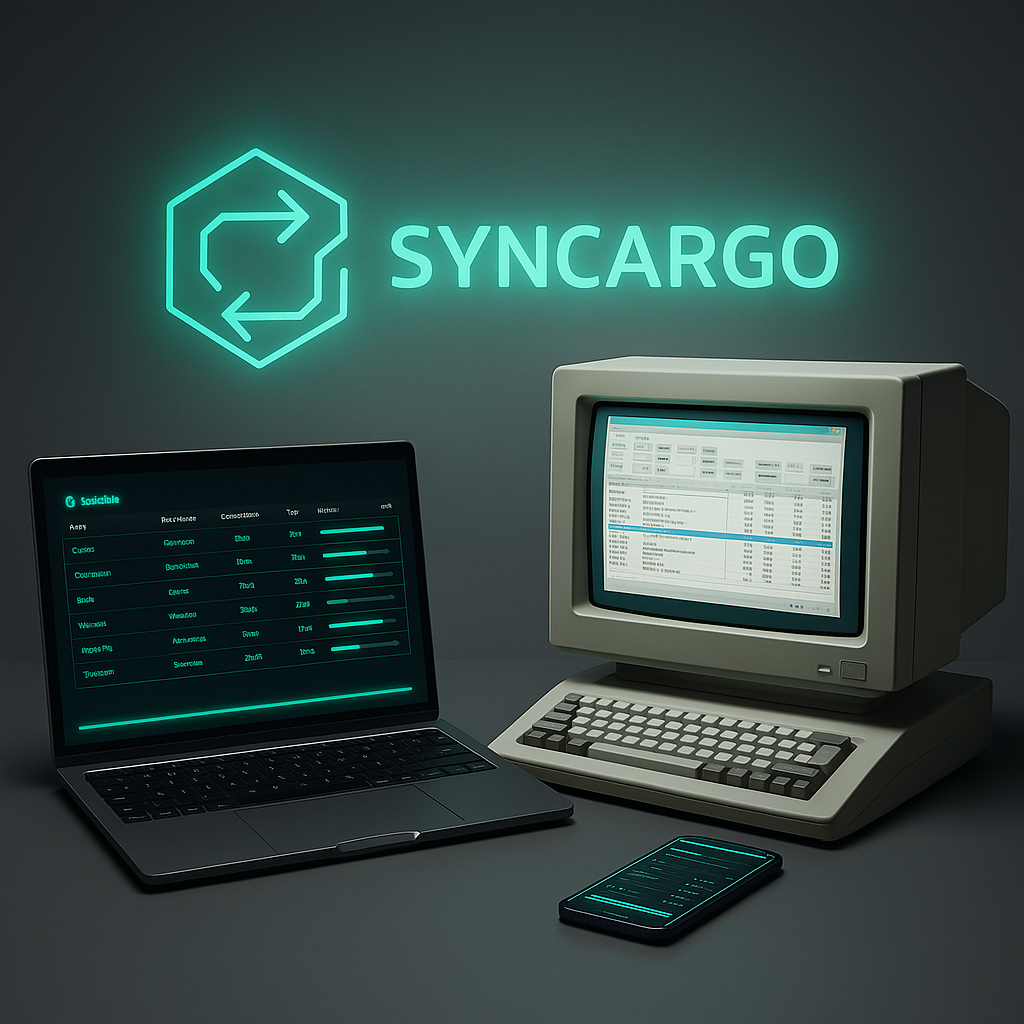
Syncargo is a continental logistics architecture designed to remove fragmentation from European road transport.It connects shippers, carriers and drivers into one synchronised flow — not as a marketplace, but as a unified operating layer that reduces empty runs, reaction time and communication chaos across the industry.
Problem
European transport still runs on:
• scattered freight exchanges,
• disconnected ERPs,
• manual document handling,
• phone calls,
• emails and PDFs,
• empty runs reaching up to 35%,
• no real-time coordination between shippers, carriers and drivers.
The market loses billions simply because Europe has no standardised execution layer
Solution
Syncargo introduces a single connective system where:
•shippers push orders directly and safely from their internal systems,
• carriers see only relevant, executable opportunities,
• drivers receive clean, verified instructions with zero guesswork,
• and every transport forms one living, traceable chain.
Instead of three disconnected worlds, Syncargo builds one ecosystem where information, demand and capacity move in the same direction.
This is not automation for one company — it is structure for the entire industry.
My role
I designed the full architecture:
• the ecosystem logic,
• the operational flow between shippers, carriers and drivers,
• the safety layers,
• the verification rules,
• the matching principles,
• and the long-term expansion model into the European transport network.
My earlier project, Japojade, validated the market’s readiness for such a system through cooperation with leading associations, insurers and logistics media.
Syncargo is a mature, next-stage evolution of that experience.
Stage
Full architecture complete, validated at industry level, ready for controlled R&D execution inside investor structures.
Aurora Modular Houses

Aurora is a modular housing system engineered for extreme climates, rapid deployment and full logistical integration.It combines factory-level precision, controlled assembly workflows and adaptive insulation systems to create homes that can be delivered, installed and made habitable in days — not months.
Aurora is not “a house.”It is an architecture for scalable living, ready for tourism, residential development and cross-continental distribution.

Problem
The modular housing market suffers from:
• weak cold-climate performance,
• unpredictable production times,
• fragmented suppliers,
• poor logistics coordination,
• and lack of unified system standards.
Most companies produce modules.Almost none produce a complete, end-to-end housing system.
Solution
Aurora unifies the entire lifecycle:
• factory production with repeatable, predictable standards,
• transportation designed around modular geometry,
• fast on-site assembly with minimal specialist labour,
• integrated heating and insulation layers optimised for northern climates,
• configurations tailored for tourism, glamping, micro-resorts or permanent living.
Aurora is built to scale across regions — the same architecture can be produced in one country and deployed anywhere from Scandinavia to alpine regions and remote rural zones.
Its strength is not in the shape of the home, but in the complete operational system behind it.
My role
I designed the entire system logic:
• production and module standards,
• logistics and transportation workflow,
• on-site assembly sequence,
• the expansion model for multiple factories,
• the architecture of future versions, including tourism-ready units.
My thinking is centred on how to make modular housing reliable, repeatable, fast and global — not a one-off construction project.
Stage
Full architecture complete.Core modules defined.Ready for R&D, prototyping and industrial partnership scaling.
Estima

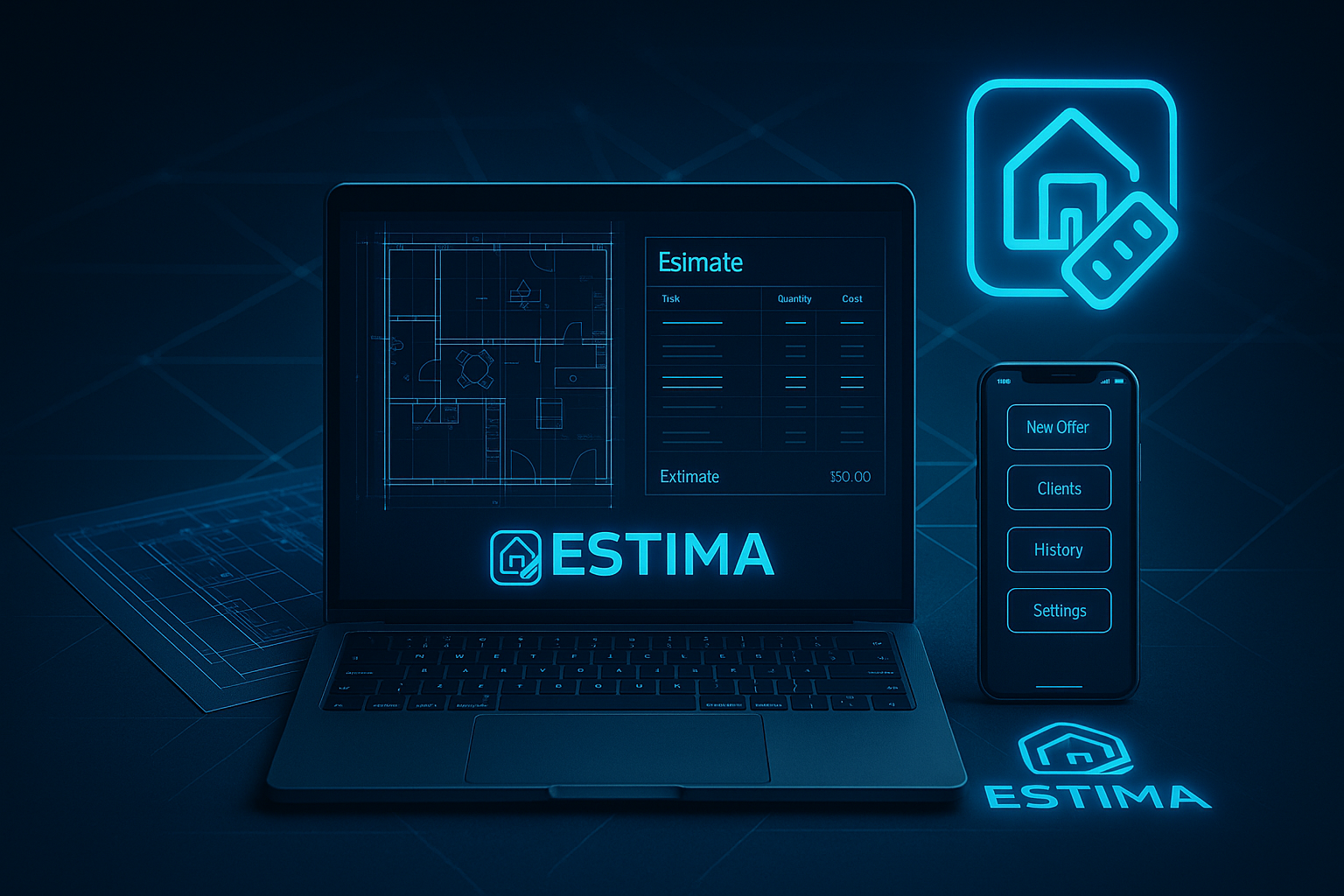
Estima is a two-layer system for the construction market:
• Estima App – a fast, mobile-first tool for small contractors to create clear, structured offers in minutes.
• Estima Pro – a full construction intelligence platform that connects plans, quantities, costs and offers into one coherent architecture.
Together they transform chaotic, manual pricing into a repeatable, scalable and data-driven process – for both small firms and multi-team companies.
Problem
Construction pricing today is usually based on:
• offers built in Word or Excel,
• templates copied from old projects,
• “good feeling” instead of precise margins,
• no standardized database of materials and labour,
• no fast recalculation when the client changes scope,
• knowledge locked in the owner’s head, not in the system.
Small businesses lose time, miscalculate prices and can’t scale.
Bigger companies drown in spreadsheets and never have one unified logic for pricing.
Solution
Estima App – Pocket-Level OffersA simple, fast tool for small contractors who work on the move:
• guided flow: scope → materials → labour → final price,
• predefined categories of typical construction works,
• automatic calculation of totals, VAT and margins,
• instant PDF offer generation and sharing with the client,
• clear history of offers for each customer and project.
I
t replaces improvised, messy offers with a clean, professional standard that can be used every time.
Estima Pro – Construction Intelligence for Teams
A deeper system for companies that manage many projects at once:
• connects project documentation with cost structures,
• standardizes materials, labour rates and equipment,
• compares profitability between projects and clients,
• protects margins and reduces risk of underpricing,
• generates multi-phase and tender-ready offers,
• gives full historical analytics, KPIs and reporting.
Where Estima App helps one contractor, Estima Pro supports whole teams and multi-location businesses.
My role
I designed the complete Estima ecosystem:
• logic and UX of Estima App,
• architecture and data model of Estima Pro,
• growth path from App to Pro so companies can scale without changing tools.
Stage
• Estima App – MVP-ready concept with structured user flows.
• Estima Pro – full system architecture and data logic prepared for R&D and implementation.
Audiotravel

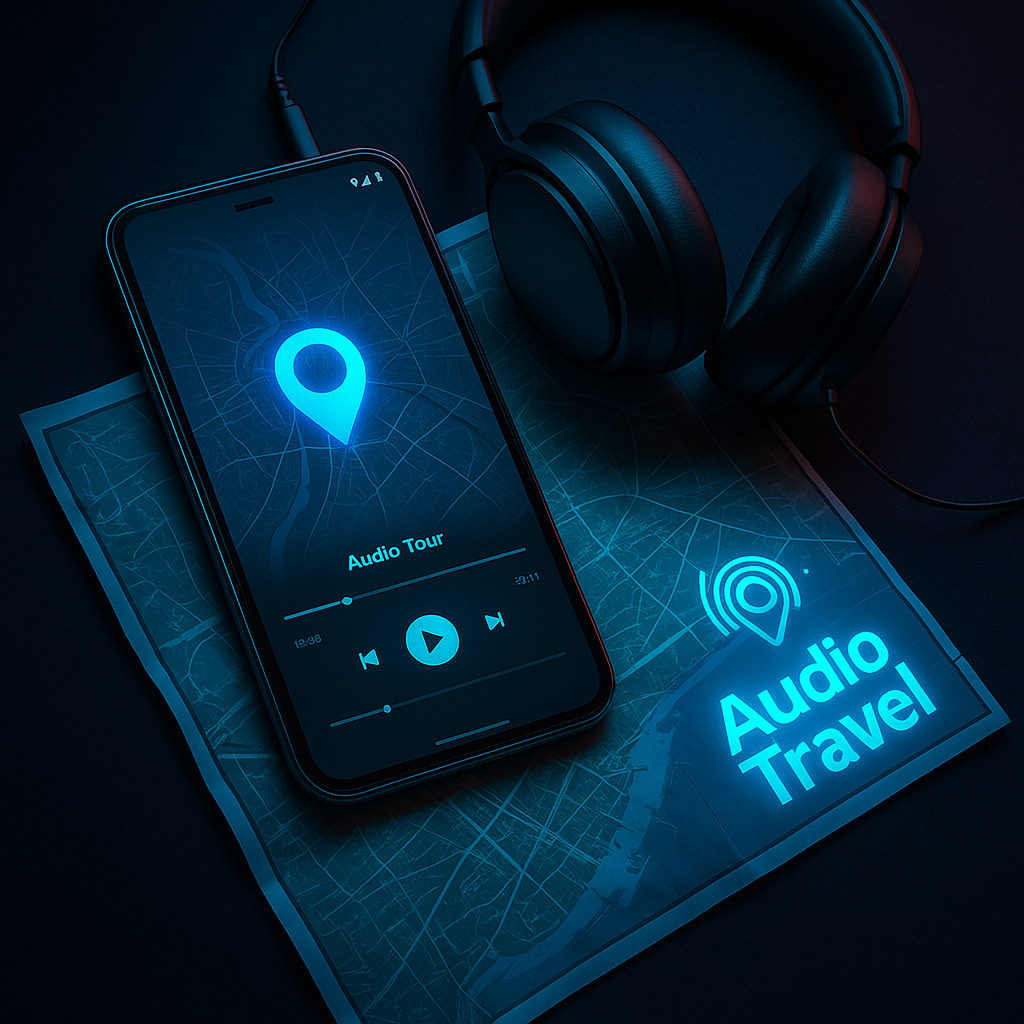
Audiotravel is a smart audio-guidance system that automatically plays stories, history and local context based on where the user is — without clicking anything.It transforms a phone into a real-time travel companion that understands location, movement and cultural context.
Where classic audio guides require tapping, searching or following rigid routes, Audiotravel reacts like a human guide: it speaks when something important appears around you.
Problem
Tourists today rely on:
• generic Google results,
• random YouTube videos,
• overpriced guided tours,
• audio guides that are static and disconnected from movement,
• apps that require constant tapping and attention.
Travelers want freedom, not instructions.They want exploration, not navigation.They want knowledge delivered naturally, without being glued to a screen.
Solution
Audiotravel delivers a seamless, hands-free experience:
• automatic playback triggered by GPS and movement,
• layered points of interest from national tourism databases,
• short and long versions of each story depending on speed of travel,
• offline mode for remote and mountain regions,
• curated regional routes (cities, islands, national parks),
• intelligent fallback to “nearby stories” when route changes.
The user simply walks, drives or bikes. Audiotravel handles everything else — like having a personal guide who never interrupts and never needs directions
My role
I designed the entire system architecture:
• location-trigger model,
• story hierarchy and routing logic,
• content structure for regional packs,
• user flow for a fully automatic experience,
• long-term plan for partnerships with tourism boards and mobility companies.
Stage
• Complete system architecture.
• UX flows prepared.
• Ready for production, content acquisition and mobile app development.
Lion's Transfer

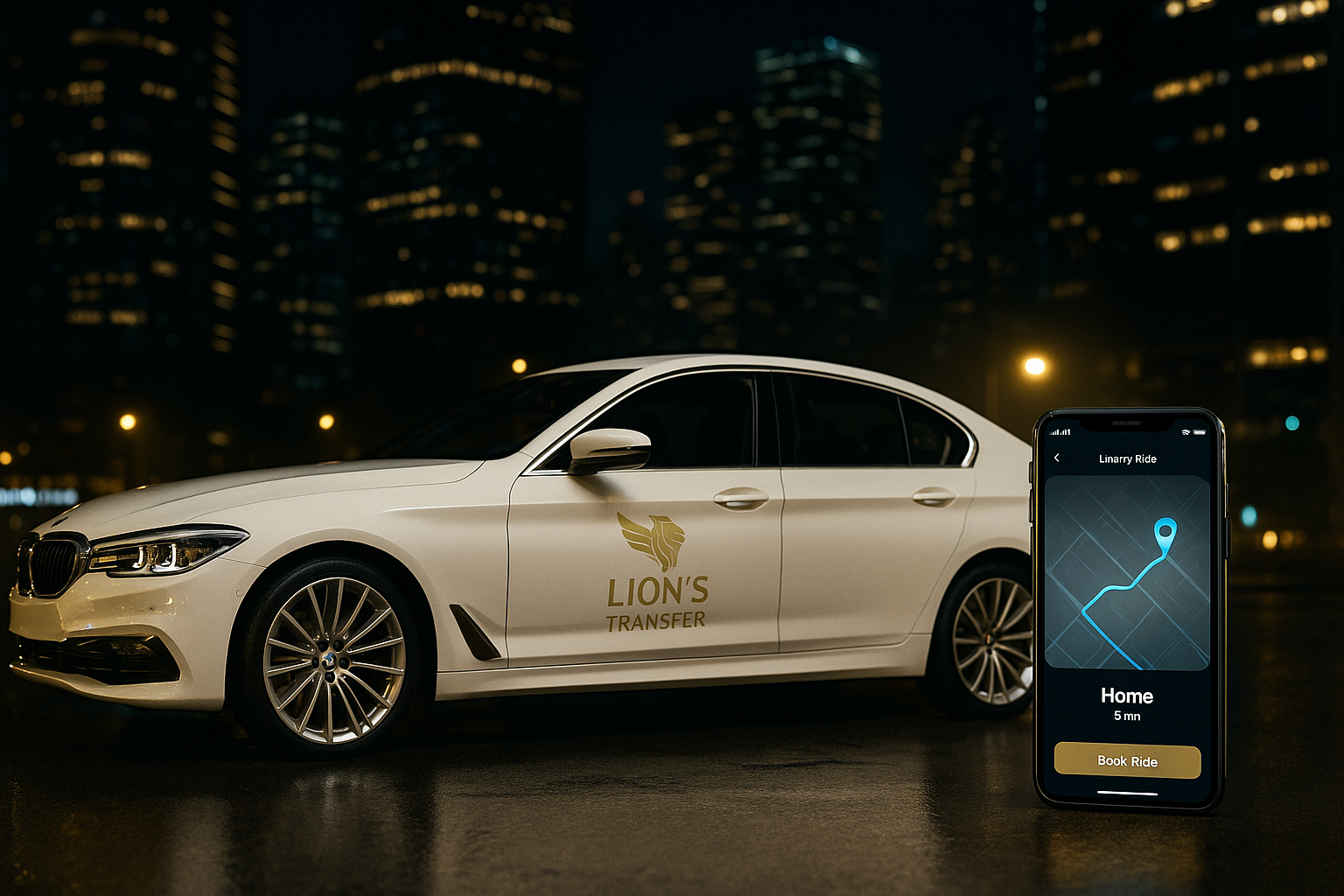
Lion’s Transfer is a premium city-to-city and in-city mobility system built on standardized fleets, unified service levels and a deeply optimized operational architecture.It’s not a taxi app, not a limo service, and not a ride-hailing copy — it is a structured mobility network designed to scale across 50–100 major cities simultaneously.
Problem
The mobility market is fragmented:
• taxis operate with inconsistent standards,
• premium services are limited to small local companies,
• drivers work in unstable financial conditions,
• ride-hailing platforms treat drivers as replaceable resources,
• no brand offers unified premium experience across multiple countries.
There is no large-scale premium mobility network with consistent fleet, predictable quality, and unified service rules.
Solution
Lion’s Transfer creates a continent-wide premium layer of mobility:
• identical fleet specification in every city (luxury sedans),
• standardized training and service protocols for drivers,
• guaranteed earnings through structured km-based economics,
• partnership with car manufacturers for bulk leasing at scale,
• fuel & operations handled through automated financial systems,
• app experience designed for premium travellers and business clients.
For the customer:
a guaranteed premium experience — same car model, same standard, same comfort, everywhere.
For the driver:
a stable, predictable and safe income system — not chaos.
For the investor:
a scalable mobility architecture that can enter multiple markets at once.
My role
I designed the complete mobility architecture:
• fleet structure,
• driver economics model,
• leasing & fuel settlement logic,
• app user flow and premium service rules,
• expansion strategy for simultaneous multi-city launch
• marketing logic including.
Stage
• Complete system architecture.
• Driver flow logic and financial model ready.
• Prepared for legal setup, fleet negotiation and app development.


I work on long-term system architecture across several industries.
For serious inquiries, write directly.
Direct contact



